Welcome to Real Japan Vibe!
Introduction
Hi, I’m the writer behind Real Japan Vibe, a travel-style blog where I share everyday discoveries and unique parts of Japanese culture. I’m based in the Nagoya area, and since 2020, visiting saunas has become one of my favorite ways to relax, reset, and explore local communities.
As I started traveling around Japan, I realized that Japanese saunas feel quite different from many overseas—quieter, more ritual-like, and closely connected to our bathing culture.
This first article is a simple guide for anyone curious about what makes Japanese saunas special and how to enjoy them comfortably.
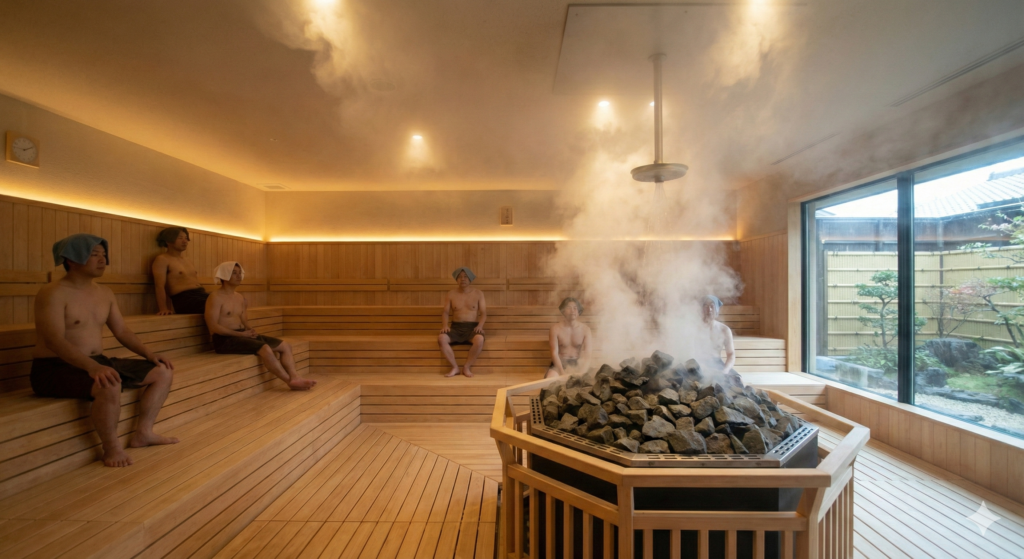
What Makes Japanese Saunas Unique
Japanese sauna culture blends warmth, calmness, and a natural rhythm. Many first-time visitors are surprised by these features:
1. The Heat–Cold–Rest Cycle
The classic Japanese routine is simple:
warm up → cool down → rest.
This cycle feels incredibly refreshing and is the base of the experience.
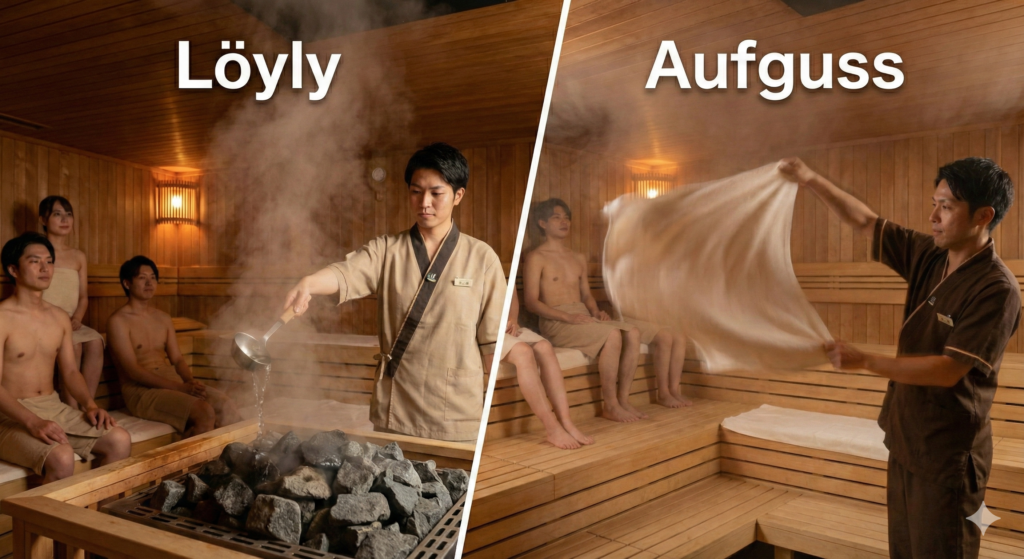
2. Löyly and Aufguss (Different but Related)
In Japan, many main dry saunas now include some form of löyly.
- Löyly: steam created when water is poured over hot stones.
- This can be automatic (auto-löyly), where water drops at set intervals
- or staff-led, where a person pours water manually.
- Aufguss: a performance-style heat session where staff circulate hot air using towels or fans.
These sessions can be energetic or calming depending on the facility.
Japan has a growing Aufguss culture, with some places offering themed or scheduled sessions.
3. Quiet Atmosphere
Most people enjoy the sauna silently. It’s normal to sit calmly, focus on breathing, and let your body settle.
4. Saunas Found in Many Kinds of Facilities
- Neighborhood sento
- Large super sento
- Modern, sauna-specialty facilities
Each reflects the local character of its region.
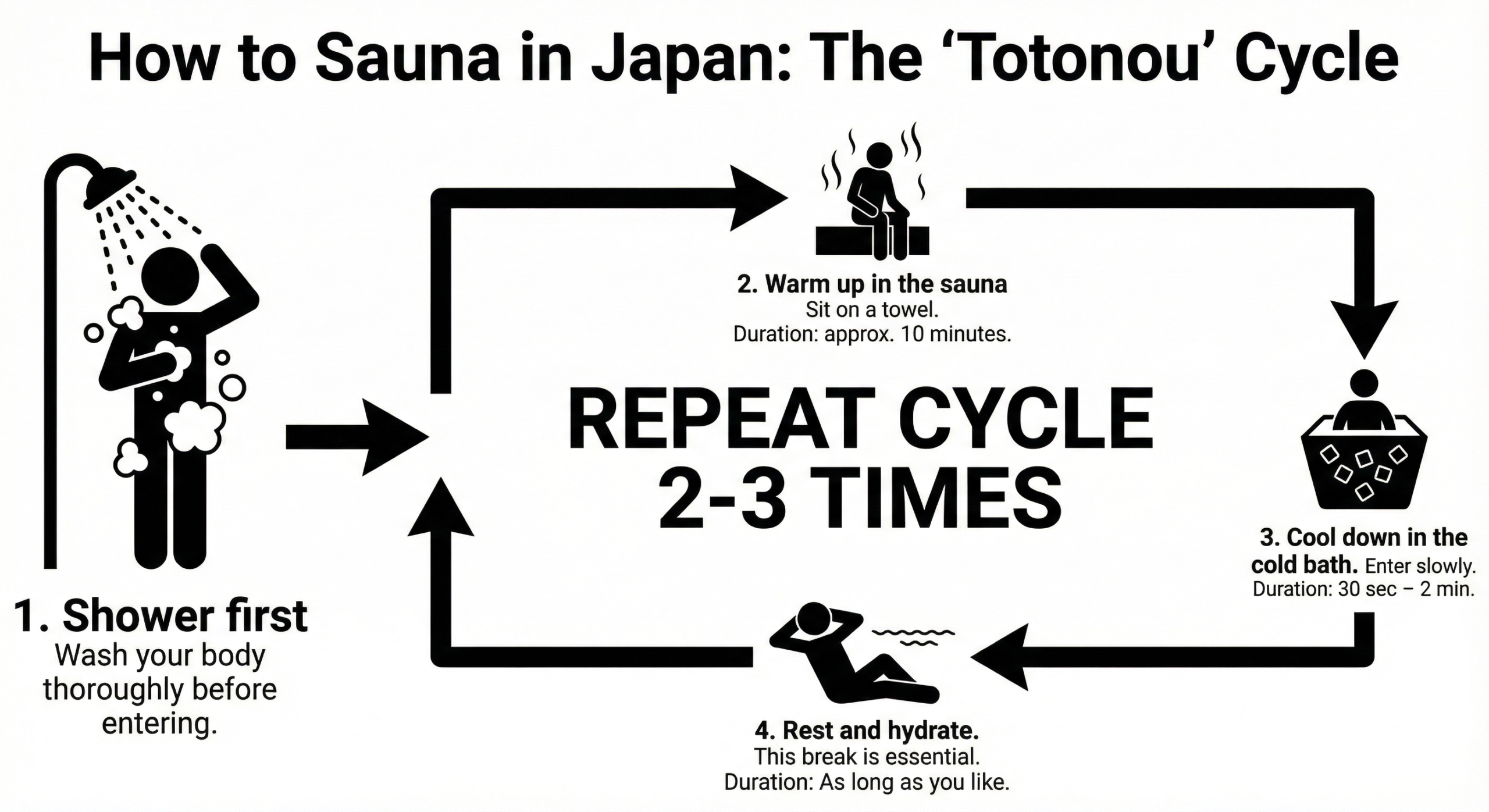
How to Enjoy a Japanese Sauna: Basic Flow
- Shower first
Wash your body thoroughly before entering any sauna or bath. - Warm up in the sauna room
Sit on a towel, find a comfortable seat, and take your time. - Cool down in the cold bath
Enter slowly and gently. Short dips are usually enough. - Rest and hydrate
Many people relax on chairs or in calm rest areas. This break is essential. - Repeat if you like
Most guests enjoy 2–3 cycles, adjusting to how they feel.
This simple rhythm—heat, cold, rest—is the heart of Japanese sauna culture.
Common Etiquette
To keep the atmosphere comfortable for everyone:
- Wash before entering the sauna
- Keep voices low
- Use a small towel inside (but don’t dip it in the baths)
- Respect personal space
- No swimwear in traditional sento or super sento
Facilities may have additional rules, so checking signs or following locals helps.
Types of Saunas You’ll Find in Japan
1. Main Dry Sauna (Most Common)
Usually heated to around 80–100°C.
Many include auto-löyly systems or occasional staff-led löyly sessions, adding gentle steam on top of the dry heat.
2. Local Sento Saunas
Found inside neighborhood bathhouses.
Simple, affordable, and full of local character.
3. Sauna-Specialty Facilities
Modern, designed for sauna fans.
Often feature powerful heaters, scheduled Aufguss events, and relaxing rest zones.
The Nagoya region has a great mix of these, and I’ll introduce specific places in future posts.
First-Timer Tips
- Many facilities rent towels
- Bring or buy water for hydration
- Visit outside peak hours for a calmer experience
- Listen to your body and don’t push too hard
Why I Started “Real Japan Vibe”
Traveling around Japan taught me how much personality each city holds—especially through its saunas and bathhouses. From small neighborhood sento to modern sauna studios, each place tells its own story.
I created Real Japan Vibe to share these stories in simple English, so travelers can enjoy Japan from a local perspective.
What’s Coming Next
- Best Saunas in Nagoya for Beginners
- A Guide to Local Sento Culture
- Regional Saunas Worth the Journey
- How Japan’s Sauna Culture Has Evolved
If you’re curious about Japan beyond the usual tourist spots, I hope this blog offers a new way to experience the country.
Thanks for reading, and welcome to the journey!

コメント